Clean air for all residents, except Southall?
In late 2022 Ealing Council published a draft Air Quality Strategy (64 pages) and Action Plan (40 pages), with a consultation that closed on 30 January 2023. Its vision is “clean air for all Ealing residents”. This page sets the strategy's goals, priorities and earlier promises beside what happened in Southall, where the borough's worst pollution meets its most vulnerable population.
It is built from our response to the consultation, with page references to the council's own documents. Where a judgement is ours, it is marked as ours.
What the borough measures
The strategy names nitrogen dioxide (NO₂) and fine particles (PM10 and PM2.5) as Ealing's two worst pollutants. The finest particles, PM2.5, go deepest into the lungs. London's background PM2.5, much of it blown in from outside the borough, is already around double the World Health Organization's guideline.
Yet of the council's 67 monitors, every one records NO₂, four record PM10, and none record PM2.5. The only PM2.5 monitors in the strategy are the three around the former Southall gasworks, commissioned by the council in 2021 and paid for by the developer.
Ealing Council network · 67 monitors
Gasworks site · 3
Each square is one monitor, as counted in the draft strategy. The strategy does not say whether the three gasworks monitors are among its 67, so they are shown apart. The council's diffusion-tube map shows annual NO₂ charts, none updated since 2021 when we checked in January 2023.
The gasworks monitors record particles, nitrogen oxides and carbon monoxide as “urban background”. The smell residents complained of came from tar and petrochemical vapours: polyaromatic hydrocarbons and volatile organic compounds. None of the 70 monitors above measures those. The developer did sample them, with weekly diffusion tubes from June 2018, but the council never published the results. They came out only through an information request, and our air monitoring page analyses them.
Too late, and too far off
The developer's vapour tubes went up in June 2018, two years after work began and after residents had already been complaining for a year. The stations that would read highest were added only on 25 September 2018, after the summer peak. The council's own monitors came in 2021, two years after the soil “hospital”, the source of most odour complaints, had closed, and they do not measure vapours. The strategy's end dates come long after the gasworks is due to be finished.
The axis is broken after 2024 so the early years can be read. On 21 October 2018 residents presented nearly 900 petition signatures to the local MP, Virendra Sharma, who said he was “satisfied” with what Berkeley had told him (post at the time). Monitoring dates are from the air monitoring page; other dates from the draft strategy, council statements and Told and Recorded.
Nine goals, set against Southall
The strategy sets nine goals. Each is quoted below, then set against the Southall record, with what our response asked the council to change. The marks are our reading of that record, and the sources are linked so you can judge for yourself.
Two documents, two shapes
The strategy has five priorities. The action plan, which is the legally required document, groups its actions under six different headings, largely carried over from the 2017–22 plan. Without a common structure it is hard to see which actions serve which priority, or to measure any of them.
Links are our reading of the headings only, not of each action.
Three graphics, three answers
The documents do not agree on where the pollution comes from. Wood burning, one of the five priorities, appears differently in each.
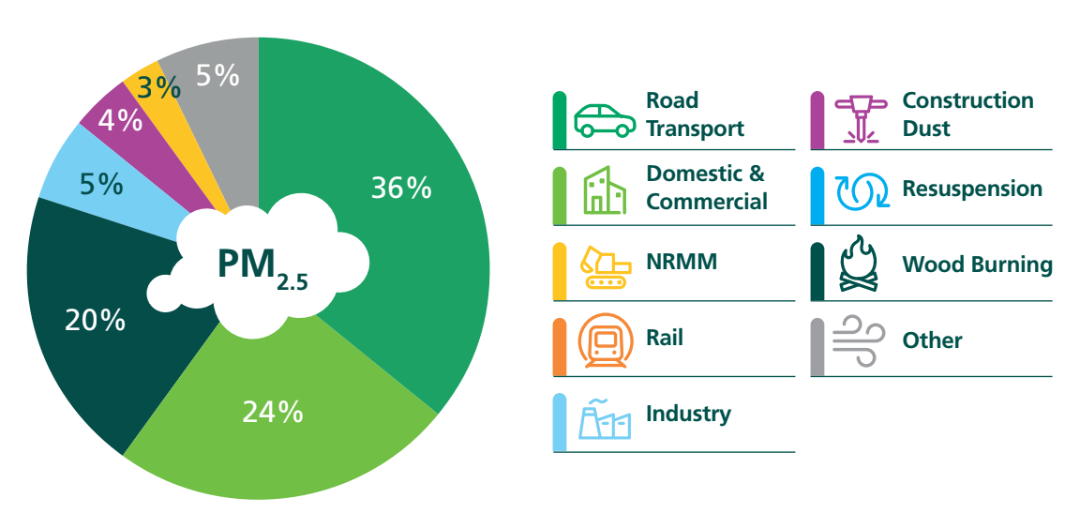
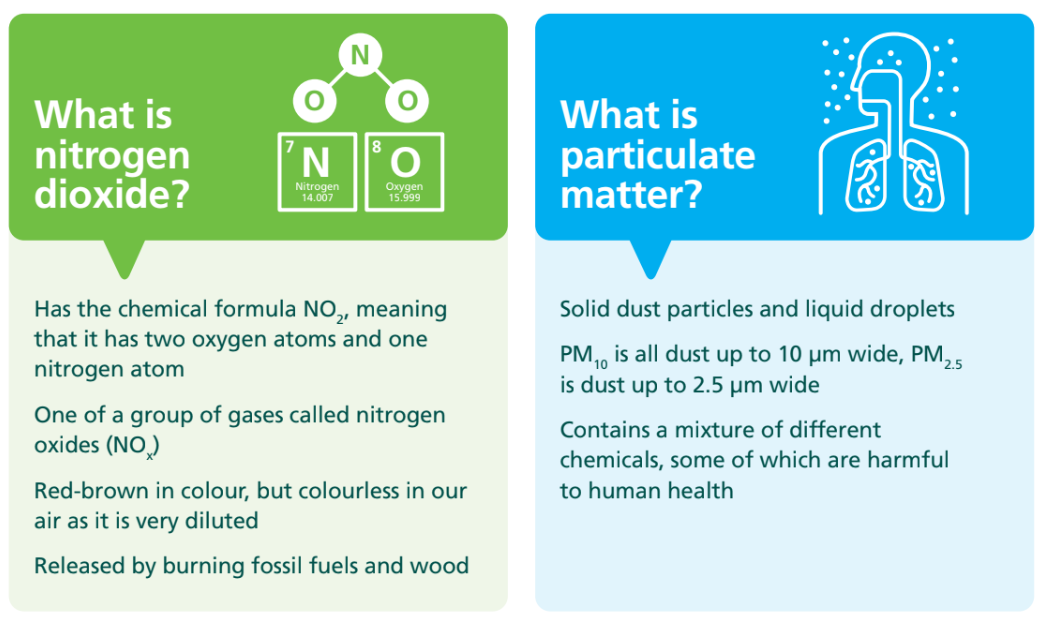
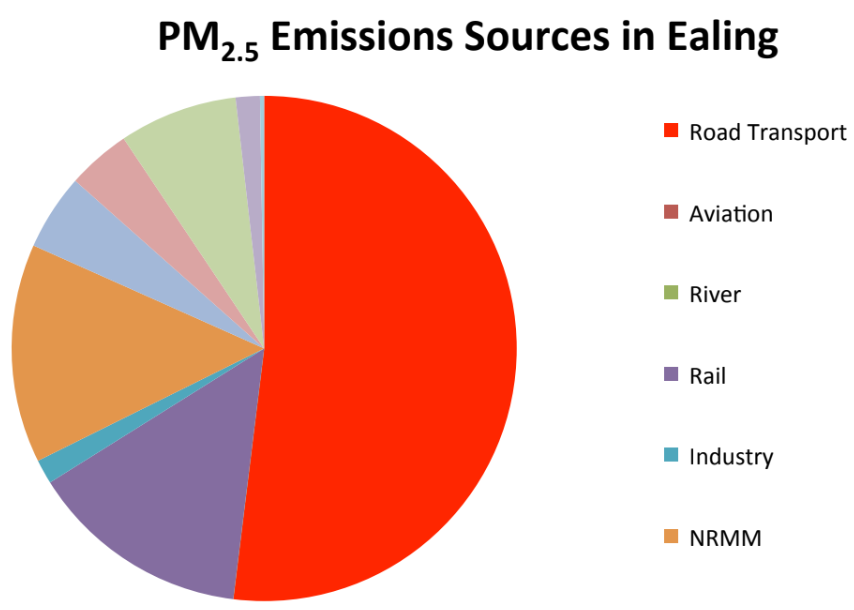
The strategy also reports that road traffic emissions, its main area for action, fell significantly between 2013 and 2019, but does not explain how. Knowing what worked would show what to do next.
The last plan: promised and done
Much of the new action plan repeats the 2017–22 plan. That plan made commitments that bear directly on the gasworks. This is what it said, and what happened.
| 2017–22 plan | What happened |
|---|
Let's Go Southall: what it cost per person
The strategy leans on active travel and the council's multi-million-pound Let's Go Southall programme. Figures released under the Freedom of Information Act give activity, not outcomes: about 50 weekly groups, about 5,000 sessions in two years, about 30,000 attendances, and 1,000 people who came at least twice. No one knows how many different people took part. Move the slider to see what each of them cost.
Uses a programme cost of £5.4 million, the figure behind the per-person sums in our January 2023 response (£5,400 each for 1,000 people). Attendance figures are from FOI 22/0079. Neither the council nor the programme has published evidence that it improved anyone's health or reduced pollution.
Active travel matters, but in a high-pollution area it means more people breathing harder at the roadside. Our response asked whether it is ethical to promote it in Southall without first cutting pollution there, and making roads and pavements safe to walk and cycle on, especially for children, older people and disabled people.
What we asked the council
The response put these questions to Ealing Council in January 2023, grouped here by subject.
What the response asked for
The response accepted much of what the strategy says. Its concern is that the words will not be acted on or enforced. It asked for:
- Targeted protection for children, older people, people with lung conditions and pregnant women: in and around schools at school-run times, sheltered housing, care homes and known hotspots, starting where inequalities are greatest.
- All pollutants, not only NO₂ and particles, including the hydrocarbons and solvents behind the gasworks odour.
- More PM monitors, especially for PM2.5, in Southall and across the borough, with all data published and kept up to date.
- Baselines and measures for each priority, including equalities data, and regular published progress, as on the council's performance dashboard.
- One structure for strategy and plan, with terms defined, and joint accountability across the climate, health, housing and inequalities portfolios.
- Consistent sources, and an explanation of how road emissions fell between 2013 and 2019.
- Enforcement of construction management plans, nuisance law, anti-idling and smoke control, and enclosure of polluting works.
- Reporting that works: a simpler way to report odour and pollution, with reports treated as a pattern rather than as isolated incidents.
- Trees and parks: large-scale tree planting in the Southall focus area, and proper upkeep of existing parks.
- Hotspots first: traffic schemes such as low traffic neighbourhoods placed where monitoring shows pollution is high, not low.
- A longer consultation. Six weeks over Christmas and New Year was not enough for residents to read 104 pages and respond.
- Leadership by example: no developer hospitality, no car rides to Southall meetings, no parking in cycle lanes.
How this was checked
- The strategy and plan are the 2022 consultation drafts. Page numbers refer to those drafts. The adopted versions may differ.
- Monitor counts are the strategy's own. We have not counted the network independently.
- The Southall record draws on Public Health England's published risk assessments, council statements (some preserved by the Internet Archive), Freedom of Information replies and the Told and Recorded page, which checks official statements against residents' records and monitoring data.
- The marks on each goal are our judgement. “Contradicted” means the council's own actions in Southall run against the goal. “Undefined” means the goal cannot be measured as written. “Open question” means the evidence is not yet in.
- What this cannot show. This page compares what the council wrote with what it did. It does not measure anyone's exposure, and it makes no claim that any illness was caused by any pollutant.
Sources
All sources are public. Links were checked in January 2023, and some may since have moved.