Southall Stories · Data page · Updated 20 November 2026
Southall Data Centres 2025–26
Ealing has given the go-ahead to two hyperscale data centres in Southall: Trident Way was granted permission in December 2025, and the planning committee resolved to grant the Honey Monster scheme in July 2026, though no decision has yet been issued. They sit in the part of the borough where people spend the most years in poor health. This page sets out that health gap, the risks the data centres could add, and how little of either was assessed before the decisions were made.
Builds on research by Southall residents, published as the Southall Data Centre Cluster briefing paper.
Disclosure. I live near the Trident Way site. I answered the developer's second-round survey on Trident Way in December 2024 (published here; my answers are quoted in its SCI), and I made the single objection to the Honey Monster application.
Women in Southall Park against women in Pitshanger. The five highest figures in Ealing are all in Southall and Norwood Green.
For either data centre. In 2018 the council required one for housing on the Honey Monster site.
218 diesel at Trident Way and 86 HVO at Honey Monster, about 2 km apart. Never assessed together.
All the council's Honey Monster screening report says under "Human Health".
The two schemes at a glance
Global Technical Realty. Four data centres on one 13-hectare site at the International Trading Estate, Southall Green ward. 218 diesel generators. Granted 19 December 2025; demolition under way.
CyrusOne. One data centre on Bridge Road, Norwood Green ward. 86 generators running on HVO. Resolved to grant July 2026; awaiting the Mayor of London and the Secretary of State.
For a full side-by-side comparison of size, power, cooling, money and jobs, see the Southall Data Centres Action Group's facts page.
The health gap
Healthy life expectancy is how many years a baby born now could expect to live in good health if today's patterns held. The Office for National Statistics published the first estimates for small areas in July 2026.
Southall women live almost as long as anyone in Ealing. They spend far longer unwell. Each bar below is one of Ealing's 41 areas; Southall and Norwood Green are in red.
Full table for women and men, with confidence intervals: ealing-healthy-life-expectancy-2019-2023.csv. The male figure for Southall Green East rests on imputed mortality data.
Why the gap exists
- Deprivation. It barely changes how long people live but sharply reduces how long they live well. Southall Green is Ealing's most deprived ward.
- Earlier diabetes and heart disease. South Asian people in the UK develop type 2 diabetes five to ten years earlier on average. Some of the first evidence came from the Southall Diabetes Survey.
- The pandemic. 2019 to 2023 includes Covid-19, which hit these streets hardest.
These are not England's worst figures, and differences between the lowest few areas are within the margin of error. The figures do not measure air quality.
Who lives next to the sites
The developer's own screening report for Honey Monster records that life expectancy in Norwood Green ward is below the England average for men and women, that deaths under 75 from all causes, circulatory disease and preventable causes are "notably worse than the England average", and that the local population is 42.5% Asian and 21.8% Black.
Former Honey Monster site
Swipe sideways to see the whole graphic.
The screening report gives Dairy Meadow Primary as about 250 m away in one place and about 320 m in another. It also lists Havelock Primary as about 480 m away; on the map it is about 260 m south-west. Khalsa and Clifton Primary are not in the report; their distances are measured on the map.
Trident Way
The committee report treats the Brent Road homes and the houseboats as "high sensitivity" receptors for noise. The developer removed one building from its plans after objections from Brent Road residents.
The risks to health
Neither data centre is running yet. These are the ways they could affect health, what is known about each, and what was not assessed.
Swipe sideways to see the whole graphic.
Air
The World Health Organization's cancer agency classifies diesel engine exhaust as a cause of lung cancer, naming power generators among the sources (IARC, 2012). Its nitrogen dioxide and fine particles are linked to heart and lung disease and early death (WHO air quality guidelines, 2021). The generators run during power cuts and for routine testing.
- The council's own air quality consultant found Trident Way "would not achieve Air Quality Neutral status due to emissions from the operation and periodic maintenance testing of 218 diesel backup generators". The answer was £3 million, not a change to the scheme.
- Trident Way may test each generator for an average of 16 hours a year: about 3,500 generator-hours. No condition requires a cleaner fuel or caps emissions.
- Honey Monster's generators changed after its air quality assessment. CyrusOne's consultants calculated the new ones emit nitrogen oxides "approximately 3.8 times higher" than those assessed, and that "hourly NO2 concentrations would increase". A new assessment was left until the Environment Agency permit, after planning permission (Ramboll memo, February 2026). The draft permission's emissions limits are set for the new engines.
- The whole borough is an Air Quality Management Area.
Not assessed: both sites' generators running at once, or Honey Monster's new generators.
More: Clean Air, Except Southall, my data page on Ealing's 2023 air quality strategy, and what the gasworks air monitoring shows.
Heat
Peer-reviewed field measurements around four air-cooled data centres of 36 to 169 MW in Arizona found air downwind 0.7 to 0.9°C warmer on average, up to 2.2°C, detectable up to 500 m away (Sailor, Abolhassani and Martin, 2026). The Honey Monster data centre is air-cooled and draws about 105 MW on average.
- Southall is a heat-vulnerable "priority neighbourhood" in the University of Manchester's Climate Just mapping.
- Heat-related illness falls hardest on older people and people with heart and lung conditions.
Not assessed: the effect on outdoor temperatures at either site. The study is from the US and is a first measurement.
More: Feeling the Heat, on heat, air pollution and inequality in Southall.
Noise
Cooling plant runs day and night. The World Health Organization links night-time noise to disturbed sleep, and long-term exposure to traffic noise to heart disease (WHO environmental noise guidelines, 2018).
- Trident Way: plant noise must be 5 dBA below typical background levels at the most sensitive homes (condition 13).
- Honey Monster: houseboats less than 15 m from the site.
Not assessed: two sites together, and low-frequency hum.
Conditions only help if they are enforced. In 2025 the council's noise team traced industrial noise near my home to a broken acoustic barrier, then decided it did not count as a nuisance.
Construction
Trident Way's build is expected to take five and a half to six years, to around 2030. CyrusOne expects to start in 2027. The two could overlap for years.
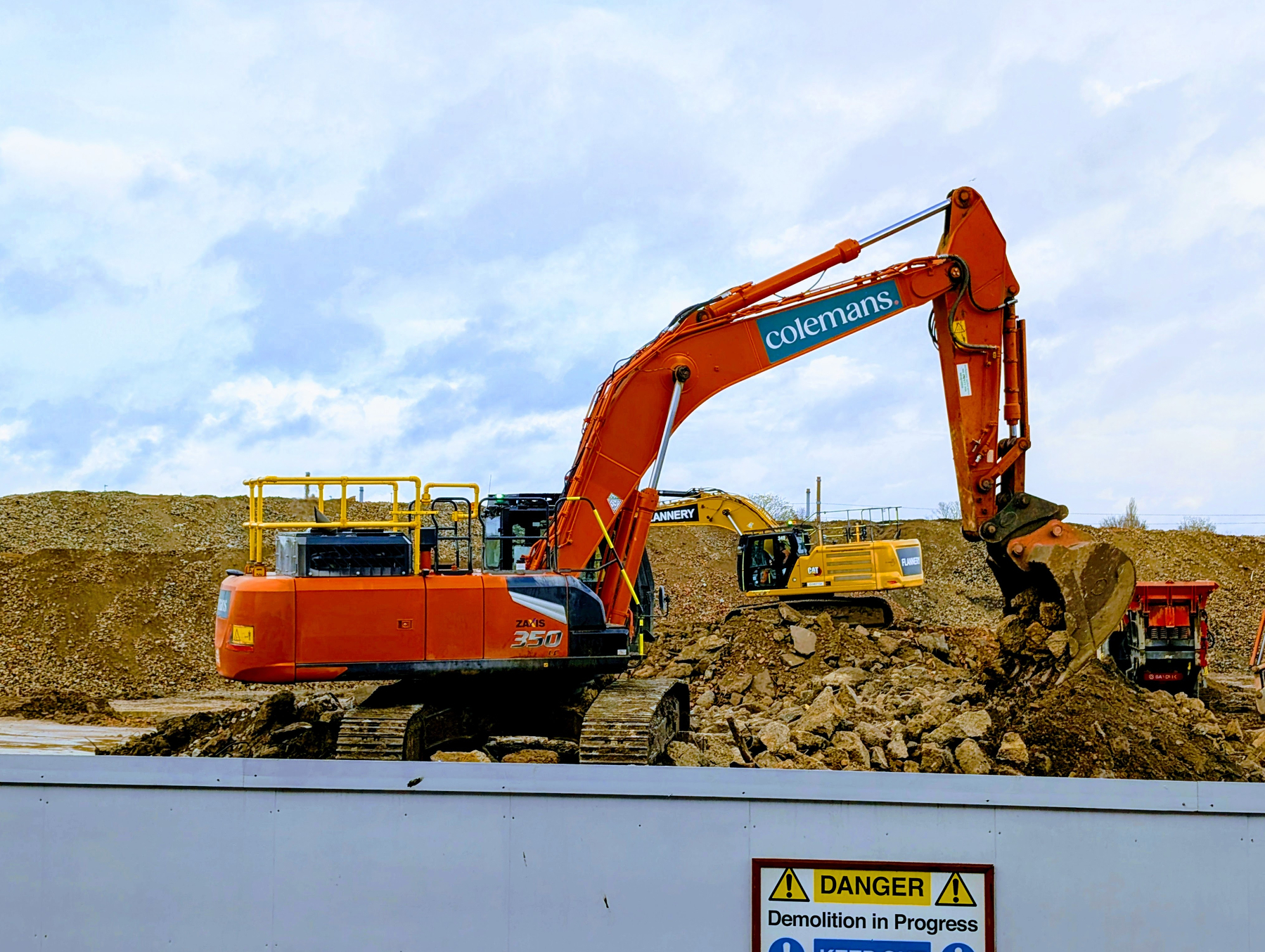
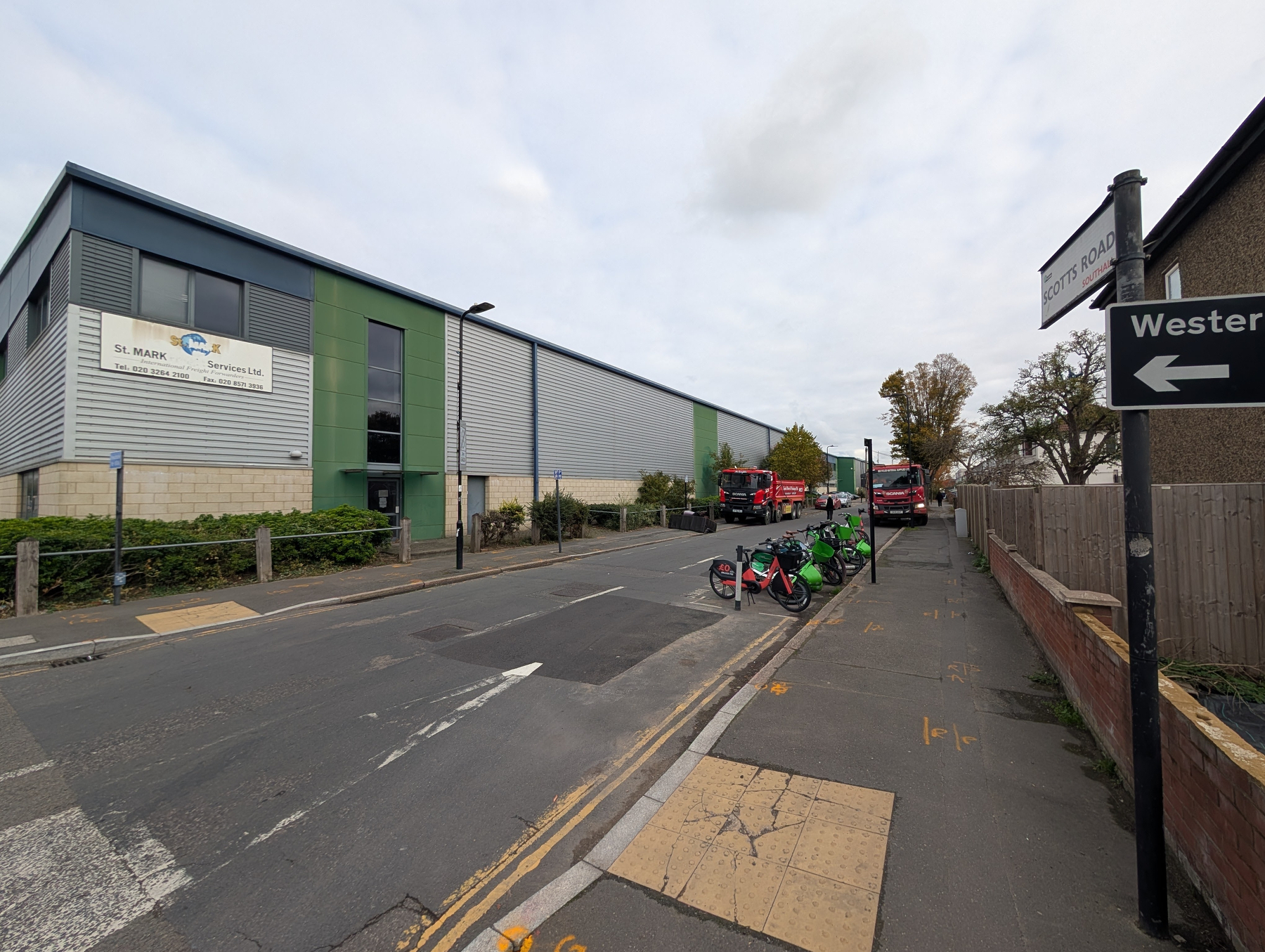
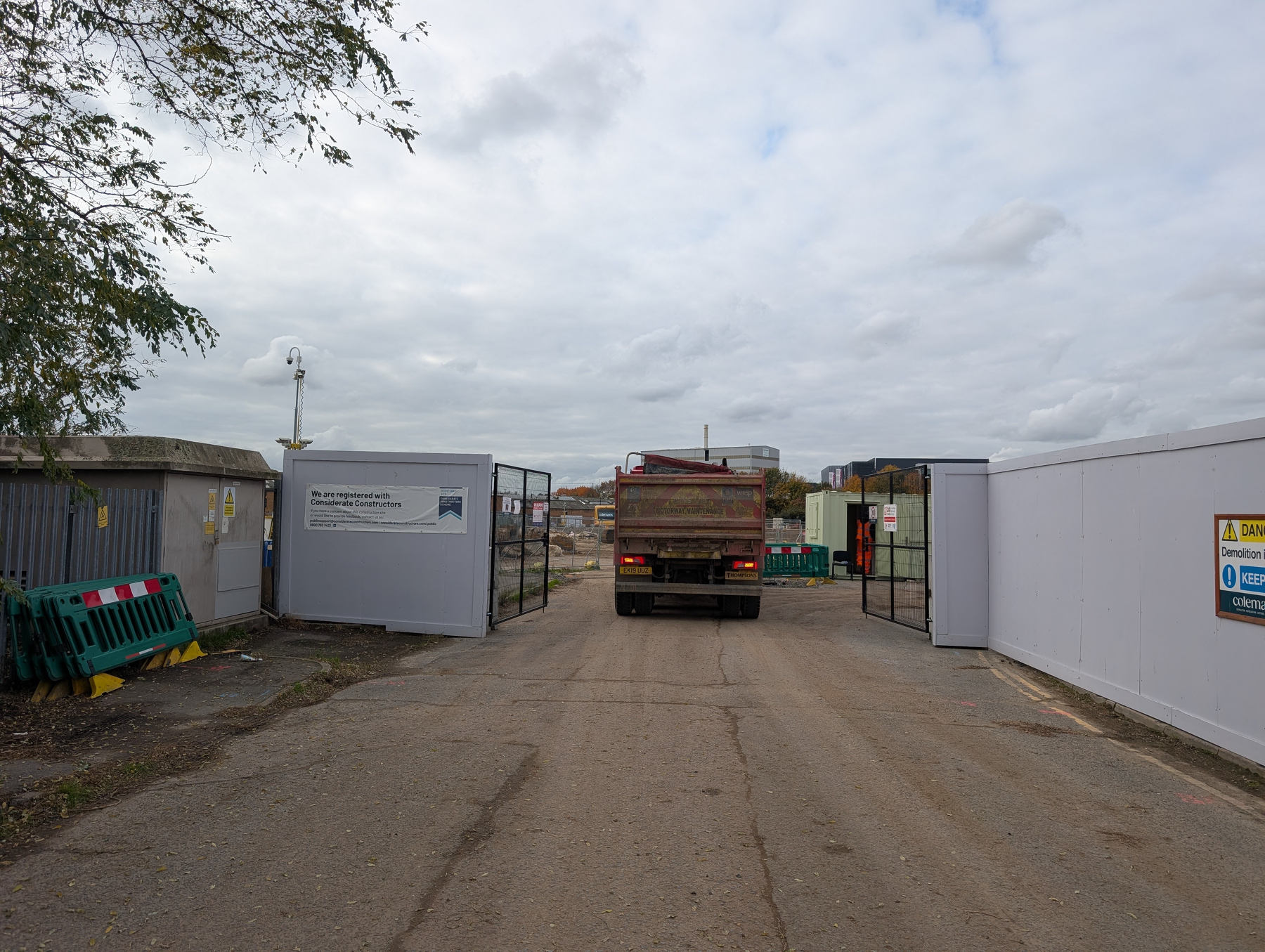
- Dust and lorry traffic through residential streets. On 29 October, rubble trucks idled partly on the pavement by the Trident Way site. On 17 November, rubble was being crushed on site (photos).
Not assessed: two building sites at once.
How much of this was assessed
Swipe sideways to see the whole graphic.
Data centres do not automatically need an environmental impact assessment; the council decides. On 13 June 2025 Ealing decided Honey Monster did not need one. Its officer report, published on the planning portal under the separate screening reference 251707SCE, assesses human health in one sentence:
"Implementation of a CEMP and compliance with conditions would ensure significant environmental effects in relation to human health would not be likely."
A CEMP is a construction management plan. The report does not mention the health figures in the developer's own screening report. The developer's report put health effects down to "lifestyle factors which cannot be accurately quantified or controlled at the planning stage".
Trident Way had a full environmental impact assessment, but human health was not one of the topics assessed.
Two schemes, never assessed together
The Honey Monster screening left out Trident Way because it had not yet been approved. Trident Way was approved by committee four months later, and the screening was never revisited. Yet council officers were comparing the two schemes. On 5 November 2025 the council's air quality lead wrote:
"similar to our dealing with the GTR data centre we will likely employ our own Air quality expert to independently review this planning application."
On 21 November 2025 the transport planner set Honey Monster's contributions "above the contribution level sought for the International Trading Estate data centre". And the Trident Way committee report counted the "emerging data centre cluster" as a reason to approve, while concluding there would be no "unacceptable cumulative impacts".
The cluster counted as a benefit. It was never counted as a risk to the people living in it.
Who was asked
Swipe sideways to see the whole graphic.
The streets in between
CyrusOne's flyer area for Honey Monster was "agreed with LB Ealing Planning Officers (26 October 2024)". It left out Western Road, Montague Waye, Norwood Road and South Road: the streets between the two data centres, which will live with both. Featherstone High School and Greenfields Nursery School are on Montague Waye.
The developer's report does not say which stretch of South Road was left out, so the map highlights all of it, from the railway north to The Broadway. The Honey Monster site is shaded lightly; the darker part is roughly where the data centre building will go, north of the canal spur.
- The Honey Monster flyer area, "agreed with LB Ealing Planning Officers (26 October 2024)", left out Norwood Road, South Road, Western Road and Montague Waye (spelt "Montague Way" in the developer's report).
- Of 19 answers to the Honey Monster survey's main question, 32% were strongly against, mostly citing pollution. The developer concluded the scheme was "broadly supported".
- A health warning in the Trident Way survey (mine) was quoted in full in the developer's report, then left out of its summary.
- Representations to the council: 1 objection of 12 (Honey Monster), 3 of 5 (Trident Way). No member of the public spoke at the Honey Monster committee.
How the area was set: the council holds no record of a decision setting it; the developer's consultants drew it. Their own email says the flyer went to 2,376 addresses on 25 October 2024, not the "over 3,000" in their report. The same day, a council regeneration officer (not a planning officer) asked for Park Avenue, both sides of The Green and King Street, and the Havelock Family Centre to be added ("The red line boundary along the Green seems arbitrary"); these were hand-delivered later. Nobody mentioned the streets between the two sites. A council planning officer had agreed to two evening exhibitions "in lieu of an online webinar and a weekend event". Source: emails released 19 November 2026 under information request 26-1710, 17 working days late.
Where things stand
- Granted 19 December 2025. Demolition under way. Its generators still need an Environment Agency permit.
- Resolved to grant 15 July 2026. Not yet approved: no decision notice has been issued. Awaiting the Mayor of London's Stage 2 decision (GLA ref. 2025/0940) and a Section 106 agreement. Generators need an Environment Agency permit.
- A Southall resident asked the Secretary of State to rule that Honey Monster needs a full environmental impact assessment.
- The ministry replied that the Secretary of State "is considering" the request.
Trident Way: demolition under way
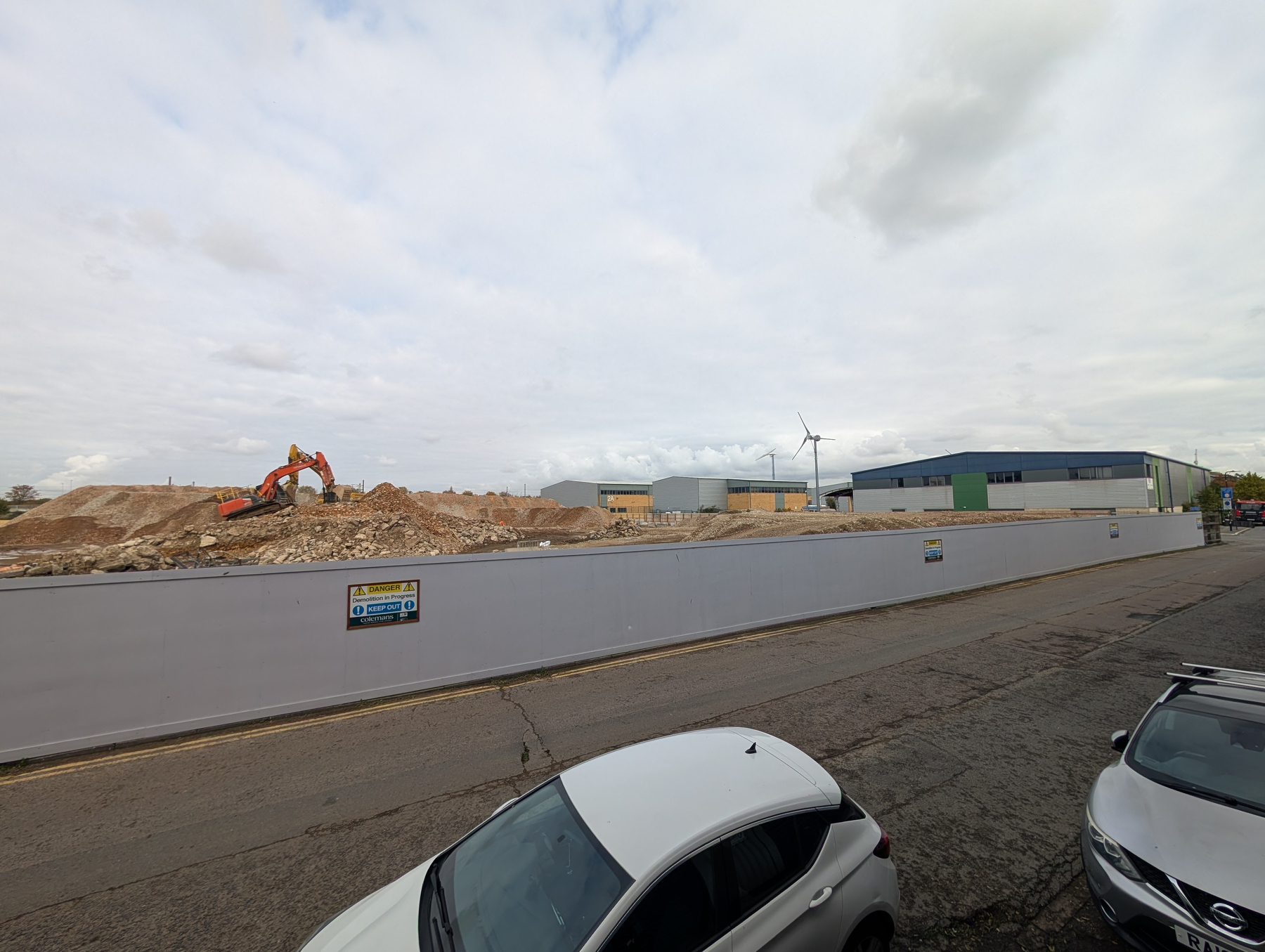
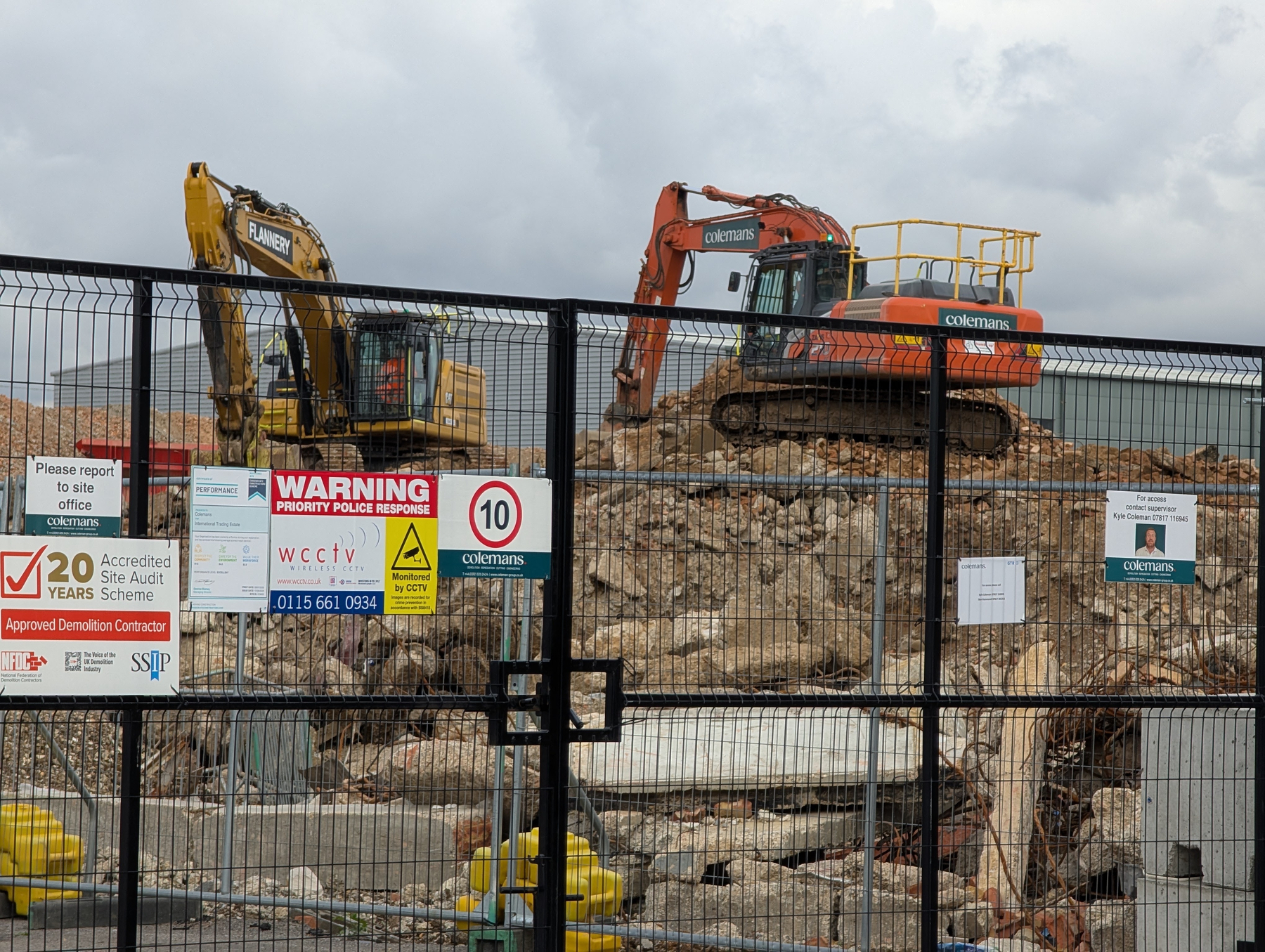
Photos taken from the street outside the Trident Way site. On 17 November, excavators were breaking up concrete and the rubble was being crushed on site, raising dust and noise.
17 November 2026


29 October 2026
What is established, and what is not
Established
- ONS figures and confidence intervals.
- Screening 251707SCE and its one-sentence health assessment.
- The developer's own record of Norwood Green's health.
- No health impact assessment for either scheme; one required for the same site in 2018.
- Trident Way not "air quality neutral"; no fuel or emissions condition.
- Honey Monster generators emit about 3.8 times the NOx assessed; not reassessed before the decision.
- Officers compared the schemes on air quality and money, never in assessment.
Still open
- The Mayor's and the Secretary of State's decisions on Honey Monster.
- An updated air quality assessment for Honey Monster's new generators, promised for the Environment Agency permit.
- Replies from Ealing Council and CyrusOne to questions put on 15 and 17 November 2026 (none by the 20 November deadline).
Not evidenced; not claimed
- That the data centres have harmed, or will harm, anyone's health.
- That either site sits inside a particular low-health area (no boundary overlay).
- Any motive on the council's part.
- A specific temperature rise in Southall.
Further reading
- Southall Data Centres Action Group: the campaign, the full scheme comparison, and how to take part.
- Southall Data Centre Cluster briefing paper: residents' research on heat, air quality, water and carbon.
- Screening opinion 251707SCE: the council's officer report and decision notice are on Ealing's planning portal (search 251707SCE), with the developer's EIA screening report. The council confirmed there is no other assessment in an information request response (10 September 2026).
- ONS health state life expectancy, small areas, 2019 to 2023.
- Clean Air, Except Southall: Ealing's 2023 air quality strategy and my response, as a data page.
- Feeling the Heat (Southall Stories): heat, air pollution and inequality in Southall.
- Southall Air Monitoring 2018–19: the gasworks, the last time Southall's health was written down and not weighed.